
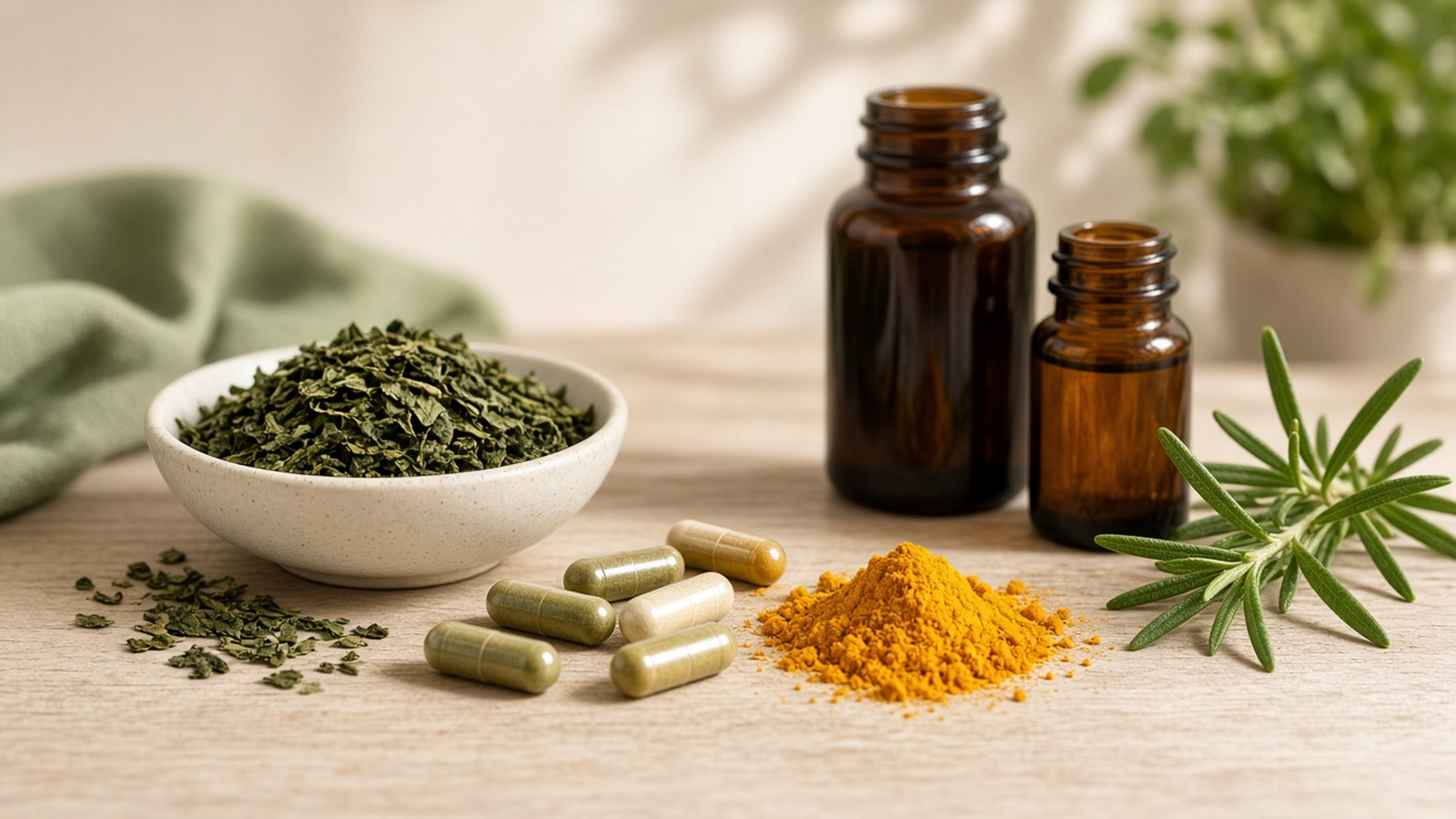
Natural Doesn't Always Mean Safe: Supplements and Your Liver
November 24, 2026 · David Alonso, MD
Supplements now make up a growing share of medicine-related liver injury. Here's which products come up most often, the warning signs to know, and how to take the supplements you value safely.
"It's natural, so it's safe, right?"
I hear some version of that question often, usually about turmeric, green tea extract, or ashwagandha. Many supplements are perfectly reasonable to take, and some have real benefits. But "natural" doesn't mean "harmless," and one organ in particular deserves a little attention: your liver. A large new U.S. study shows supplements now make up a growing share of medicine-related liver injury. Here's what that means for you, and how to keep taking the supplements you value safely.
What the new study found
The U.S. Drug-Induced Liver Injury Network (DILIN) has been carefully tracking cases of liver injury caused by medicines and supplements at major medical centers since 2004. A new report in the journal Hepatology looked at about 2,000 of those cases over 20 years.
- Antibiotics are still the most common cause, at about 41% of cases overall.
- Herbal and dietary supplements rose from 15% of cases in 2004 to 2010 to 23% in 2018 to 2024.
- More than half of all patients in the registry were hospitalized, and about 6% needed a liver transplant or died.
One important caveat: this registry collects the more serious cases referred to specialty centers. It tells us which products are showing up more often, not how likely any single person is to be harmed. For most people taking a supplement, the risk of liver injury is low.
Which supplements come up most often?
A 2024 study in JAMA Network Open looked at six botanicals that liver specialists see most often in these cases:
- Turmeric or curcumin
- Green tea extract
- Ashwagandha
- Garcinia cambogia (often sold for weight loss)
- Red yeast rice (sold for cholesterol)
- Black cohosh (sold for menopause symptoms)
About 4.7% of U.S. adults, or an estimated 15.6 million people, had used at least one of these in the past month. That's roughly as many people as take some common prescription medicines. Turmeric was by far the most popular.
A few details are worth knowing:
- Turmeric as a spice in your cooking is not the concern. The reported cases involve concentrated supplements, especially "high-absorption" formulas, including those combined with black pepper extract (piperine).
- Drinking green tea is generally fine. The liver cases mostly involve concentrated green tea extract in capsules, often in weight-loss or "fat-burning" products.
- Red yeast rice naturally contains the same compound as the prescription statin lovastatin, so it can carry similar side effects, without the dose control of a prescription.
Why supplements can surprise us
Unlike prescription medicines, supplements don't need FDA approval for safety or effectiveness before they're sold. The researchers also pointed out that when supplements linked to liver injury have been tested in labs, what was in the bottle often didn't match the label. Multi-ingredient blends, bodybuilding products, and weight-loss products are the hardest to judge, because you often can't tell exactly what you're getting or how much.
Liver injury from supplements is also usually unpredictable. It tends to come from an individual reaction, not from taking too much, so it can happen even when someone follows the label.
Warning signs to know
Supplement-related liver injury usually shows up within a few weeks to a few months of starting a product. Call your doctor if you notice:
- Unusual tiredness or loss of appetite
- Nausea or pain in the upper right side of your belly
- Dark, tea-colored urine
- Yellowing of the skin or the whites of the eyes
- New, persistent itching
The good news is that most people recover fully once they stop the product. That's why recognizing the signs early matters so much.
My take as an internist
I'm not anti-supplement. Many of my patients use them, and some have real value when there's a good reason to take them. What concerns me is when supplements stay invisible. Patients often leave them off their medication list because they don't think of them as "real" medicines, and then a mildly abnormal liver test leaves us both guessing.
When I see unexplained liver test changes, one of the first things I ask about is supplements, including teas, powders, and anything bought online. Often, simply stopping a product and rechecking labs a few weeks later answers the question.
Practical takeaways
- Tell your doctor about every supplement you take, including powders, teas, and gummies. Bringing the bottles to your visit is even better.
- Prefer single-ingredient products with third-party testing seals (such as USP or NSF) over proprietary blends.
- Be especially cautious with weight-loss, "fat-burning," and bodybuilding products.
- If you have liver disease, drink heavily, or take several prescription medicines, check with your doctor before starting a new supplement.
- Know the warning signs above, and stop the product and call your doctor if they appear.
- If you're taking a supplement for a specific reason, like cholesterol or menopause symptoms, ask whether there's a proven treatment that would serve you better.
This post is for general education and isn't personal medical advice. Please talk with your own doctor before starting, stopping, or changing any medicine or supplement.
Sources
- https://doi.org/10.1097/hep.0000000000001894
- https://www.uspharmacist.com/article/druginduced-liver-injury-causes-shifted-over-2-decades
- https://jamanetwork.com/journals/jamanetworkopen/fullarticle/2821951
- https://www.healio.com/news/gastroenterology/20240808/nearly-156-million-americans-using-botanical-supplements-may-be-at-risk-for-liver-injury
- https://www.ncbi.nlm.nih.gov/books/NBK548561/
- https://www.ncbi.nlm.nih.gov/books/NBK547925/
- https://www.ncbi.nlm.nih.gov/books/NBK548536/
- https://www.fda.gov/food/dietary-supplements