
Leftovers, Stomach Bugs, and a Healthy Thanksgiving
November 25, 2026 · David Alonso, MD
Simple leftover rules and a few norovirus facts that help keep your Thanksgiving happy and healthy.
"How long are Thanksgiving leftovers good for?"
That's a frequent question this time of year, usually followed by "and is it okay that the turkey sat out during the football game?" The good news is that keeping your holiday safe doesn't take much. A few simple habits with food, and a little extra handwashing, go a long way. Late fall is also the start of stomach bug season, so here's what I'd like my patients to know before the big meal.
Why the holidays are a setup for stomach trouble
The CDC estimates that about 48 million Americans get sick from foodborne illness every year. Two culprits matter most around Thanksgiving.
- Bacteria in food left out too long. One germ, Clostridium perfringens, grows in cooked food sitting at room temperature. According to the CDC, most of its outbreaks happen in November and December, often linked to turkey and roast beef cooked in large batches. It typically causes cramps and diarrhea within 6 to 24 hours.
- Norovirus, the "stomach flu." It isn't actually the flu. Norovirus is the leading cause of vomiting and diarrhea in the U.S. and causes more than half of all foodborne illnesses. Outbreaks are most common from November through April, and it spreads easily when people gather, share serving spoons, and pass dishes around.
The leftover rules that actually matter
These come straight from USDA and CDC food safety guidance:
- The 2-hour rule. Get leftovers into the refrigerator within 2 hours of cooking. If food has sat out longer than that at room temperature, it's safest to throw it away. Germs grow fastest between 40°F and 140°F.
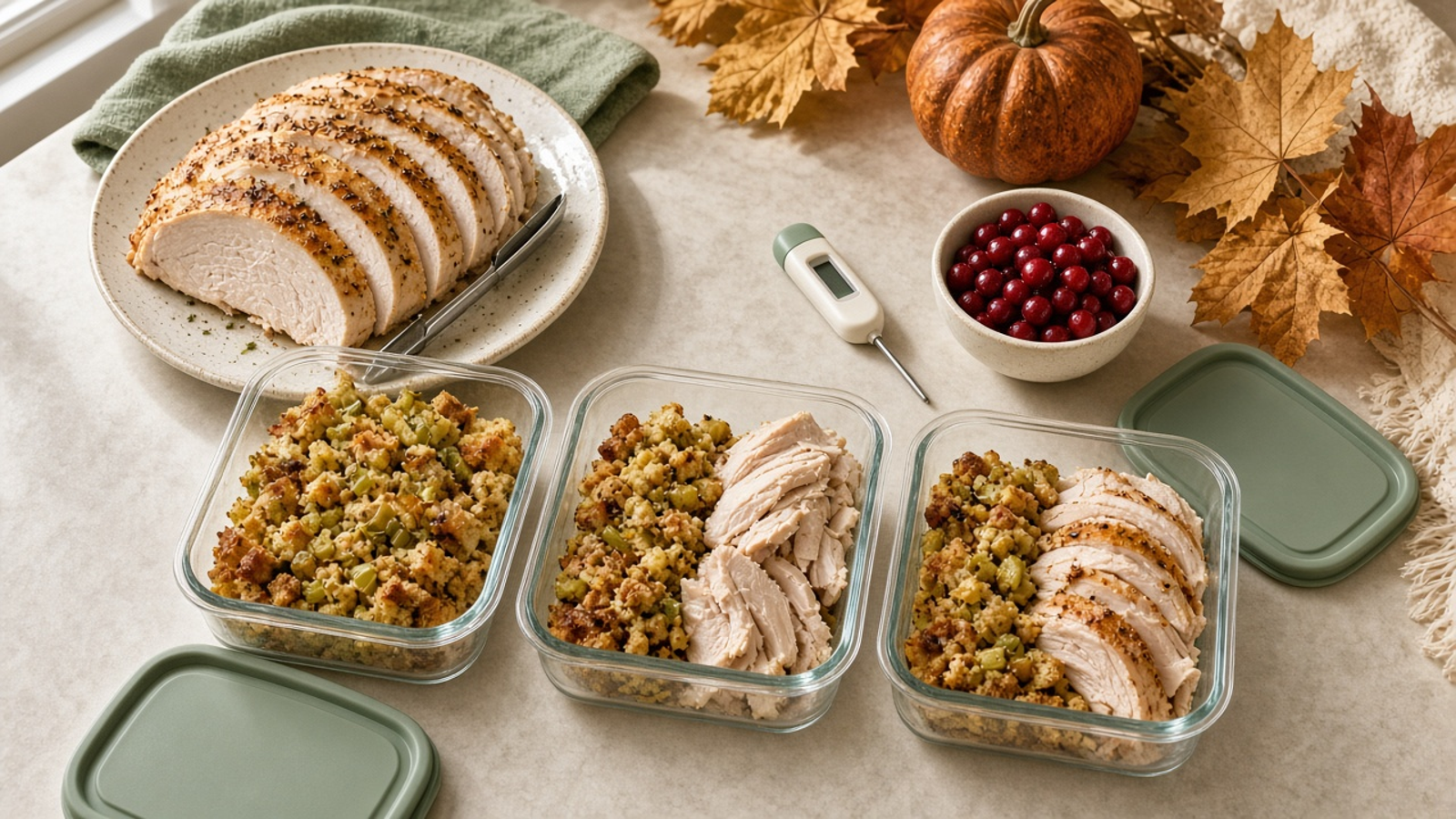
- Cool it fast. Divide big batches into shallow containers so they chill quickly. Carve the turkey off the bone and refrigerate the meat in smaller portions rather than putting a whole bird or a deep pot of stuffing in the fridge.
- Keep your fridge at 40°F or colder. A simple fridge thermometer is an inexpensive way to check.
- Use it or freeze it. Refrigerated leftovers are good for 3 to 4 days. That means Thanksgiving leftovers should be eaten or frozen by about Monday. Frozen leftovers stay safe, and taste best if used within 3 to 4 months.
- Reheat to 165°F. Heat leftovers until they're steaming hot all the way through, and bring gravy to a boil. A food thermometer takes the guesswork out.
- Smell isn't a safety test. Food that causes illness often looks and smells perfectly normal.
Norovirus: what to know if someone gets sick
Symptoms usually start suddenly, 12 to 48 hours after exposure: vomiting, diarrhea, nausea, and stomach cramps, sometimes with fever, headache, or body aches. Most people feel better within 1 to 3 days, but they can still spread the virus for a few days afterward.
A few things surprise people:
- Hand sanitizer doesn't work well against norovirus. Washing with soap and water for at least 20 seconds is what counts. Sanitizer can be an extra step, but not a substitute.
- Regular household cleaners may not kill it. The CDC recommends a chlorine bleach solution (about 5 to 25 tablespoons of household bleach per gallon of water) or a disinfectant labeled as effective against norovirus, left on the surface for at least 5 minutes.
- Antibiotics won't help, because it's a virus. Treatment is rest and fluids.
- If you've been sick, don't cook for others until at least 2 days after your symptoms stop.
When to call your doctor
Most stomach bugs pass on their own. The main risk is dehydration, especially for young children, older adults, and people with other health conditions. Call your doctor or seek care if you notice:
- Very little urine, a very dry mouth, or feeling dizzy when you stand up
- Not being able to keep fluids down
- Bloody diarrhea or a high fever
- Symptoms lasting more than a few days, or severe belly pain
My take as an internist
Every year, the week after Thanksgiving brings a few calls about stomach bugs, and many of them could have been avoided. I'm optimistic here, because prevention is so simple: refrigerate promptly, reheat well, and wash your hands with soap. If you're hosting older relatives, someone who's pregnant, or anyone with a weakened immune system, it's worth being a little stricter with the 2-hour rule.
And if you wake up sick on Thanksgiving morning, the kindest thing you can do for your family is to stay out of the kitchen. Let someone else carve the turkey this year.
Practical takeaways
- Refrigerate leftovers within 2 hours, in shallow containers.
- Eat refrigerated leftovers within 3 to 4 days, or freeze them.
- Reheat leftovers to 165°F, until steaming hot throughout.
- Wash your hands with soap and water, especially before eating and after using the bathroom. Don't rely on sanitizer alone.
- If you're sick, skip food prep and wait 2 days after symptoms end before cooking for others.
- Sip fluids if you get a stomach bug, and call your doctor if you show signs of dehydration.
Wishing you and your family a happy, healthy Thanksgiving.
This post is for general education and isn't personal medical advice. Please talk with your own doctor about your specific health questions.
Sources
- https://www.cdc.gov/food-safety/data-research/facts-stats/index.html
- https://www.cdc.gov/food-safety/foods/holiday-turkey.html
- https://www.cdc.gov/clostridium-perfringens/about/index.html
- https://www.fsis.usda.gov/food-safety/safe-food-handling-and-preparation/food-safety-basics/leftovers-and-food-safety
- https://www.cdc.gov/norovirus/about/index.html
- https://www.cdc.gov/norovirus/prevention/index.html
- https://www.cdc.gov/norovirus/data-research/index.html